China Holiday Train Travel: Booking, Crowds & Backup Plans
Sources and freshness
Static planning guidance on this page is reviewed by the China Train Tickets editorial team. Train times, fares, seat classes, and availability can change, so the live result for your selected travel date is authoritative.
- Primary operational reference
- China Railway 12306 (live results may change when railway operations change)
- Page reviewed
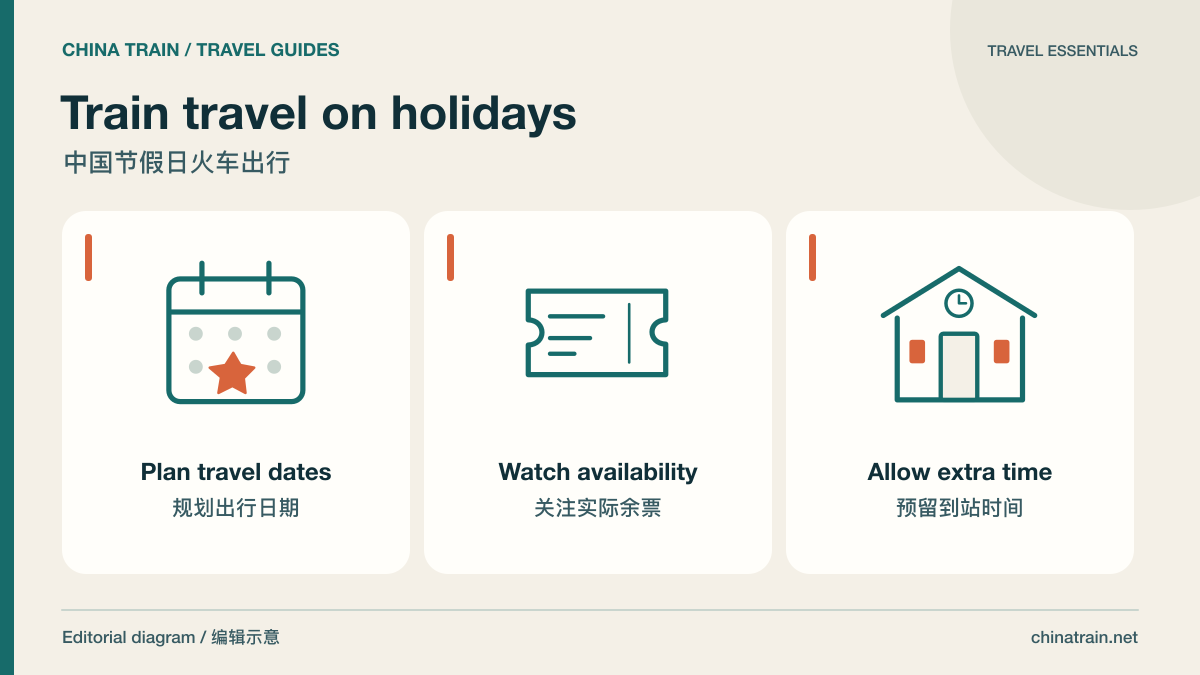
Train travel on holidays: editorial diagram of key planning topics; not a photograph or official layout.
During Chinese holidays, the difficult part is often securing a suitable departure and completing the journeys at both ends. Plan the ticket, station transfer and hotel arrival together. A payment or advance booking request is not a guarantee of an issued seat.
Identify the busy travel dates
Spring Festival travel extends beyond the public-holiday dates as people travel home and return to work. National Day, Labor Day, summer holidays and popular long weekends can also raise demand. Outbound and return peaks may fall on different days and affect different directions. Check the official holiday calendar for your travel year, including adjusted working weekends, instead of reusing last year's dates.
Plan around ticket release
The standard railway advance-sale window is 15 days including today. In other words, on a given sale date, the last normally bookable travel date is 14 days later. Check the current 12306 calendar and the departure station's release time; tickets do not all appear at midnight. Temporary timetables or individual services may be released differently.
If you submit a request before tickets open, treat it as a request until issuance is confirmed. Prepare accurate passenger document details and decide which alternative trains, stations or classes you would actually accept. See the ticket-release guide for a step-by-step explanation.
If the preferred train sells out
- Check earlier or later departures and nearby dates, including the return journey.
- Compare another station only after checking its location and city-transfer cost.
- Use an official waitlist where available, but retain a viable plan until a ticket is issued. A waitlist is not a confirmed seat.
- Consider a connection only if there is enough time for the actual transfer, including any change of station.
- Avoid accumulating duplicate bookings or boarding for a longer journey than your ticket covers on the assumption that you can extend it onboard.
Build a buffer at both ends
For a first visit to a major station during a peak holiday, allowing about 90 minutes before departure at the railway entrance is a conservative planning choice, not a national requirement. Increase it if you need a counter visit or assistance. Road congestion, entrance queues and passport checks can consume time before you even reach the waiting hall.
Do not build a fixed flight or important onward event around the final train of the day or a tight connection. Allow for disruption, and consider staying overnight before a particularly important flight. Check late-night metro and taxi arrangements at the arrival station; holiday extensions are date-specific and should not be assumed.
Pack and communicate clearly
Keep essential medicines, water, snacks, documents and charging equipment accessible, and follow the security limits. Save your train details and hotel address offline. For groups, verify each issued seat and agree where to meet if separated. Before changing a plan, review the applicable refund and change conditions, since fees and available alternatives depend on timing and inventory.
Sources and current travel checks
Core facts checked on 11 October 2026. Timetables, fares, transport hours and service arrangements should be checked again for your travel date.